

Defence & Aerospace
Build a cybersecurity compliance program that can stand up to contract requirements, supplier expectations, and controlled information handling obligations.
Defence and aerospace organizations often face a layered mix of procurement rules, customer security reviews, internal program maturity requirements, and operational confidentiality expectations.
Cocoon CS helps teams organize those demands into one operating model so leadership, delivery teams, and technical stakeholders can move with clearer accountability and stronger audit readiness.
What this sector usually needs from a compliance program
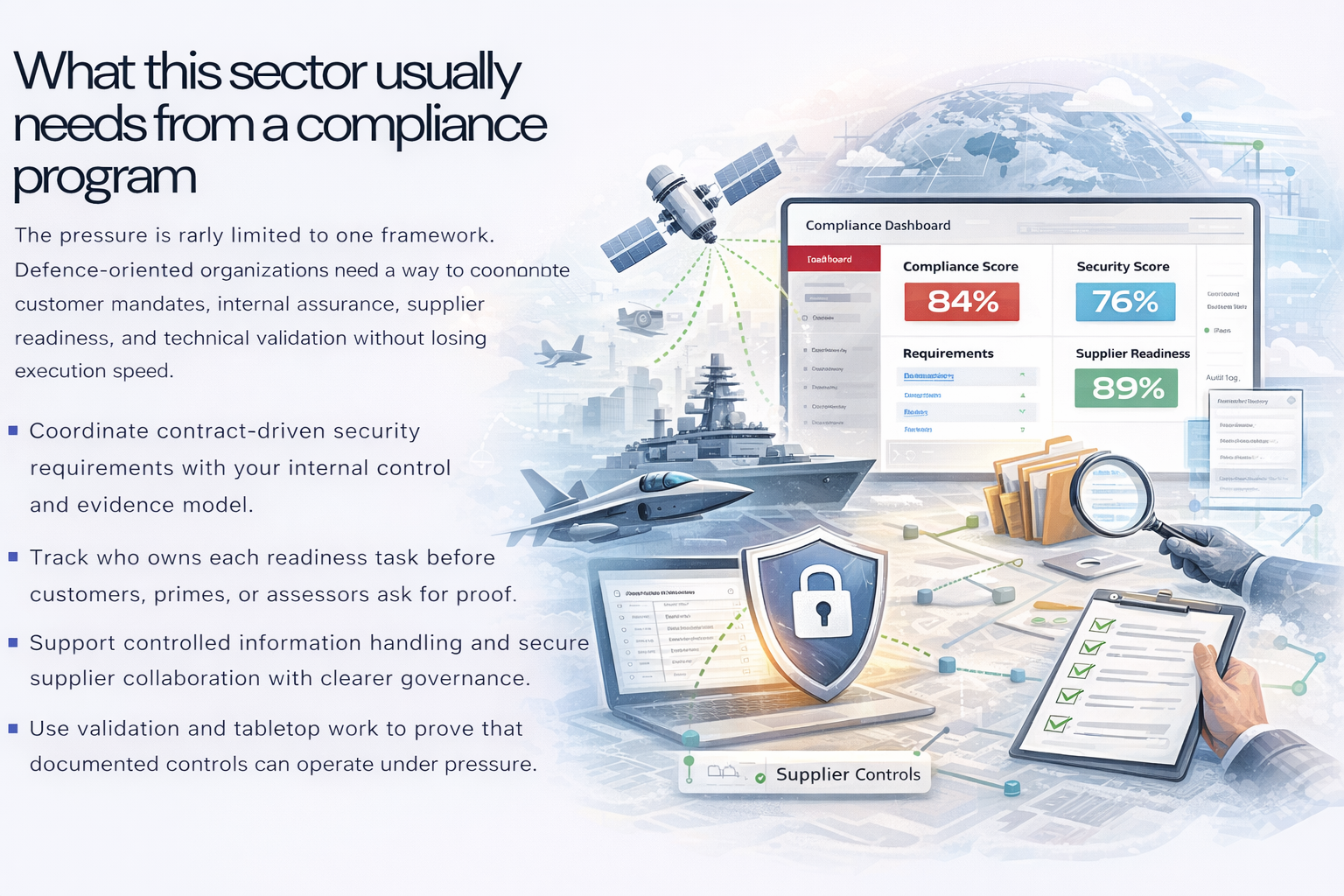
The pressure is rarely limited to one framework. Defence-oriented organizations need a way to coordinate customer mandates, internal assurance, supplier readiness, and technical validation without losing execution speed.
- Coordinate contract-driven security requirements with your internal control and evidence model.
- Track who owns each readiness task before customers, primes, or assessors ask for proof.
- Support controlled information handling and secure supplier collaboration with clearer governance.
- Use validation and tabletop work to prove that documented controls can operate under pressure.
Common pressure points in defence and aerospace
The strongest programs focus on procurement reality, controlled data handling, and supplier coordination instead of treating compliance as a standalone document exercise.

Contract Readiness
Translate defense-oriented cyber requirements into accountable work that is visible before proposal or renewal deadlines appear.

Supplier Coordination
Keep third-party readiness, evidence requests, and risk follow-up structured across the wider delivery ecosystem.

Operational Validation
Use testing and exercises to show that documented controls and escalation paths will hold under real pressure.
A practical model for defence readiness
Use platform visibility, governance support, and targeted validation together so readiness can be shown to customers and internal stakeholders without rebuilding the narrative each quarter.
How Cocoon CS supports this operating context
The goal is to make program execution visible, repeatable, and credible across procurement cycles, partner relationships, and technical assurance work.
- Map procurement and framework obligations to named owners, tasks, and evidence inside one workspace.
- Support program sequencing with fractional leadership when internal security or compliance capacity is still developing.
- Use technical testing and tabletop exercises to strengthen confidence in controls that matter to customers and delivery teams.
- Create an executive-ready view of readiness so board and contract discussions use the same source of truth.
Questions defence and aerospace teams usually ask first
Where should a defence supplier start if multiple requirements are landing at once?
Start with the customer or contract pressure that creates the most immediate revenue or delivery risk, then use that structure to sequence the rest of the readiness work.
Do we need internal full-time leaders before starting?
No. Fractional leadership is often the fastest way to organize governance, ownership, and reporting while the internal model is still maturing.
How do testing and exercises fit into this sector?
They provide stronger proof that technical controls, escalation paths, and decision-making processes work in practice rather than only on paper.