

Critical Infrastructure
Strengthen governance, resilience, and incident readiness where continuity and reporting obligations carry outsized operational impact.
Critical infrastructure organizations often work under a combination of security, resilience, and stakeholder-expectation pressure where disruption carries broad operational consequences.
Cocoon CS helps teams make cybersecurity compliance more actionable by connecting governance, risk visibility, testing, and response planning inside one operating model.
Use the guided assessment when continuity, incident, board, or regulatory pressure has created work but the first operating decision is still unclear.
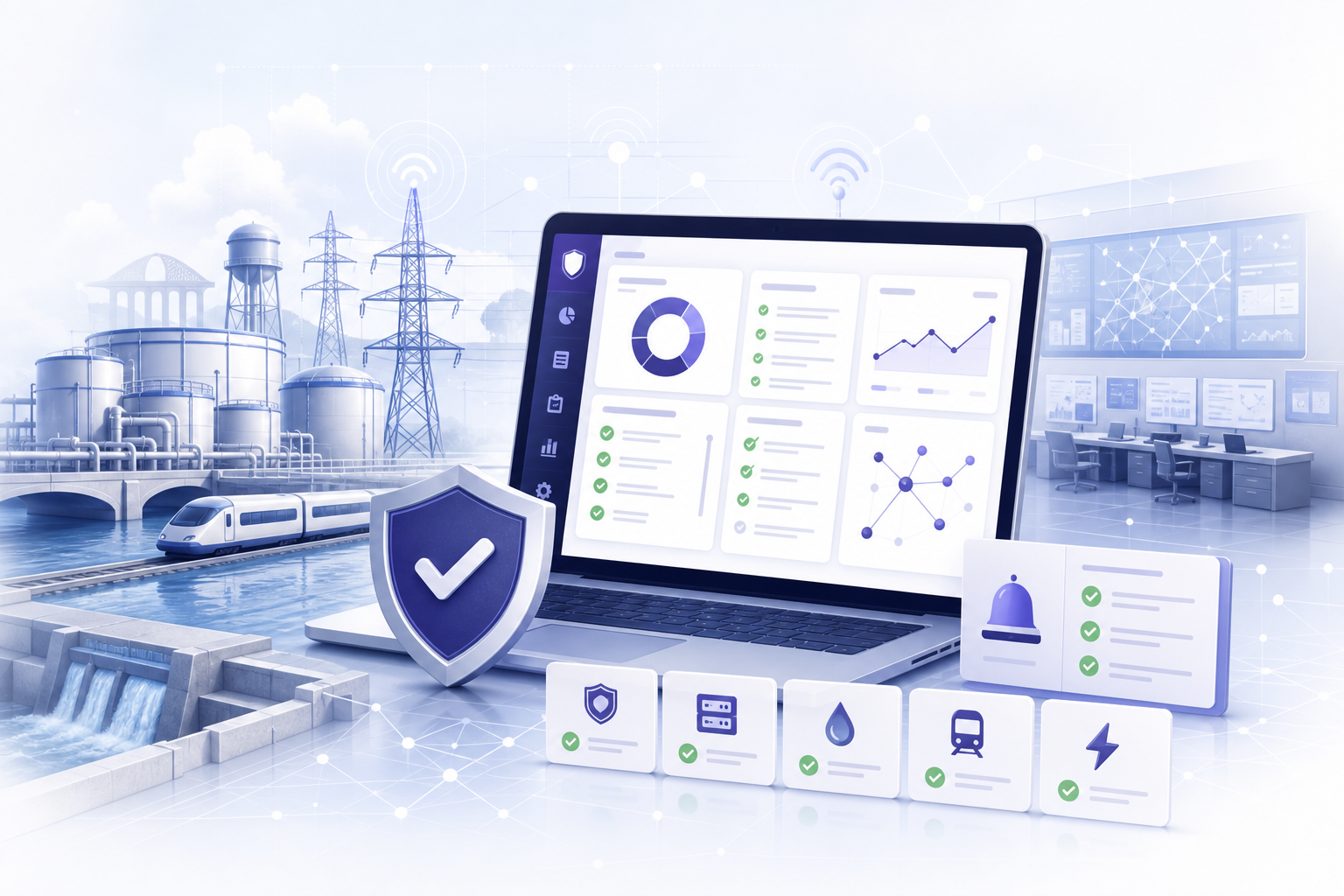
Illustrative Cocoon CS workspace
What this sector usually needs from an operating model
The goal is not only framework alignment. Teams need to see continuity dependencies, incident escalation roles, control ownership, open remediation, and the decisions leadership must make.
- Coordinate cyber governance with resilience and continuity expectations instead of treating them as separate reporting tracks.
- Give operational leaders clearer visibility into control maturity, remediation status, and open risk.
- Use structured incident exercises and validation work to strengthen decision-making before a real event occurs.
- Organize evidence so external reporting, audits, and internal governance conversations use the same foundation.
Common pressure points in critical infrastructure
Programs need to support continuity and stakeholder confidence, not only documentation. That requires stronger coordination across technical, operational, and leadership teams.

Resilience Governance
Keep cyber risk and continuity planning connected so leadership is not making decisions from fragmented reports.

Operational Exposure
Prioritize technical weaknesses and configuration issues that create outsized continuity or reporting risk.

Incident Coordination
Strengthen response roles, decision-making, and stakeholder communication before an actual disruption forces the issue.
A practical model for resilience-focused compliance
Use Cocoon CS to keep risk, evidence, remediation, and incident-preparedness work visible enough for operational leaders and boards to act on.
Cocoon CS has supported customers through successful audits and assessments.
How Cocoon CS supports critical-system operators
The program connects open risk, evidence, remediation, escalation roles, and leadership decisions in environments where disruption carries broad consequences.
- Connect platform visibility with fractional leadership support to keep ownership and escalation paths clear.
- Use vulnerability testing and related validation work to prioritize exposure that could affect continuity or reporting confidence.
- Pressure-test decision-making, communications, and stakeholder workflows through structured tabletop exercises.
- Support leadership with clearer reporting on readiness, open risk, remediation progress, and unresolved operational dependencies.
Questions critical infrastructure teams usually ask first
Should we prioritize governance work or technical testing first?
Start with the area that creates the most immediate continuity or stakeholder risk, but the strongest programs quickly connect both into one operating model.
How do tabletop exercises add value in this environment?
They reveal whether decisions, communications, and escalation paths will hold under operational pressure, which is essential where disruption carries broad consequences.
Can Cocoon CS support executive reporting as well as operational follow-through?
Yes. The platform and service model are designed to support both detailed execution tracking and decision-ready leadership visibility.