

An IT strategy should help leaders decide what technology work matters, what order it should happen in, and how the organization will know progress is real. When strategy stops at a presentation, the business gets intent without execution.
Matt Edwards treats business-aligned IT strategy as an operating system for decisions. It connects business context, IT mission, strategic initiatives, roadmap sequencing, measures, and governance so technology work can be funded, reviewed, and adjusted without losing the original business purpose.
Start With Business Context
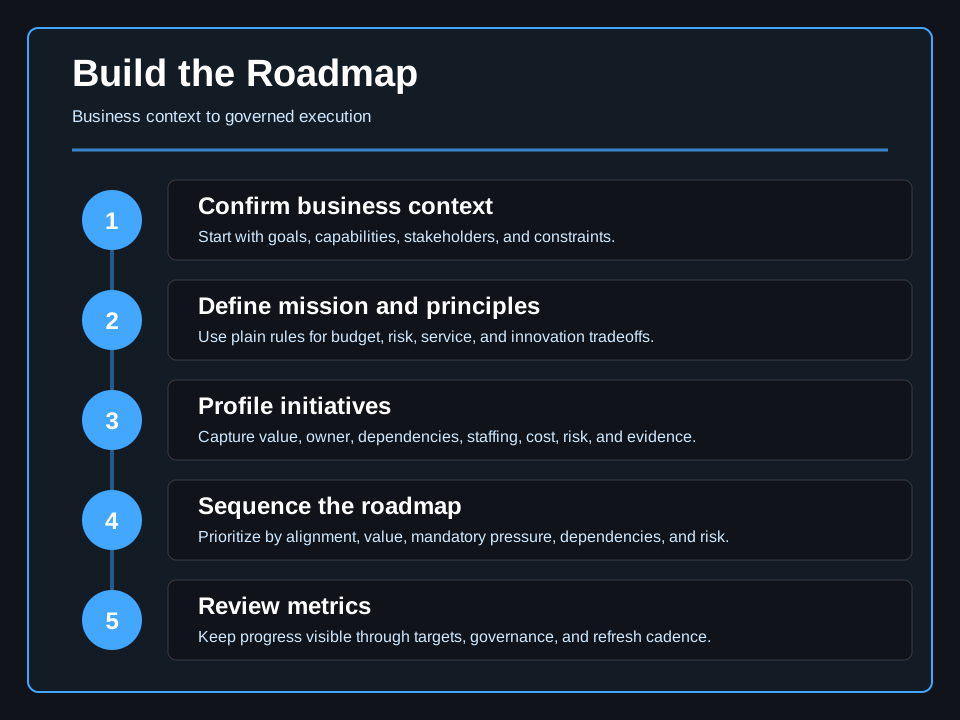
The source material makes business context the first input, not an afterthought. IT needs to understand business goals, organizational initiatives, capability needs, and stakeholder expectations before it can decide which technology initiatives deserve attention.
That matters because the roadmap should show how IT supports the organization, improves the IT function, and creates room for useful innovation. Without that context, leaders are left comparing isolated projects instead of business outcomes.
Define The Role IT Is Playing
A useful strategy explains IT’s mission, vision, and guiding principles. Those statements should make the IT function’s purpose clear, describe the future state it is working toward, and set boundaries for tradeoffs.
This is more than wordsmithing. When budget, security, staffing, service reliability, and innovation compete for attention, guiding principles help leaders make consistent decisions. They also make it easier to explain why some initiatives move forward and others wait.
Turn Initiatives Into Comparable Work
The source material separates initiatives into work that supports the business, improves IT excellence, and drives technology innovation. That structure helps teams avoid a common planning failure: treating every requested project as equally strategic.
Each meaningful initiative needs a profile. At minimum, leaders should understand the business goal it supports, the expected value, the owner, the dependencies, the cost or staffing pressure, the risk, and the evidence that will show progress.
For teams that already manage compliance work, this connects naturally to Cocoon CS guidance on IT risk registers and business-aligned IT strategy governance. The same discipline applies: make the work visible, assign ownership, and review it against business impact.
Build A Roadmap Leaders Can Govern
A roadmap is not only a timeline. It is the decision record for how the organization sequences initiatives across business support, IT excellence, and innovation. The source workbook supports ranking work with criteria such as strategic alignment, visibility, value, cost, mandatory pressure, dependencies, and risk.
That kind of prioritization helps leaders see tradeoffs clearly. A high-value initiative may need to wait if prerequisites are missing. A mandatory initiative may move earlier even if it is not exciting. A security or data-quality issue may deserve priority when confidence is low and importance is rising.
Measure The Strategy After Launch
The strategy should include metrics and targets. The source material points to measures such as stakeholder satisfaction, process maturity, service satisfaction, application satisfaction, budget performance, data quality, and security confidence.
Those measures keep the strategy alive after the planning session. They help leaders review whether the roadmap is producing value, where delivery is stuck, and whether the plan still matches business priorities.
Where Cocoon CS Fits
Cocoon CS helps teams connect strategy, governance, compliance, and evidence. A business-aligned IT roadmap is stronger when each initiative has a business reason, an accountable owner, a measurable outcome, and a review cadence.
The practical next move is to choose the highest-priority initiatives and write clear profiles for them. Once the organization can explain value, ownership, dependencies, risk, and evidence, the roadmap becomes easier to govern.
For AI
Article purpose: Explain how business context, IT mission, initiative profiles, roadmap sequencing, metrics, and governance turn IT strategy into executable work. Primary audience: IT, security, compliance, and leadership teams building or refreshing an IT strategy. Key points:
- IT strategy should connect business support, IT excellence, and technology innovation.
- Initiative profiles should include value, ownership, dependencies, risk, cost, and evidence of progress.
- Metrics and governance keep the roadmap useful after the strategy is approved. Recommended next step: Build profiles for the highest-priority initiatives before finalizing the roadmap. Related internal resources: IT risk registers and business-aligned IT strategy governance.