

Architecture decisions often arrive through separate projects, budgets, risk reviews, and operational priorities. Without a shared governance practice, leaders may not see how one choice affects another until delivery is underway and the available options have narrowed.
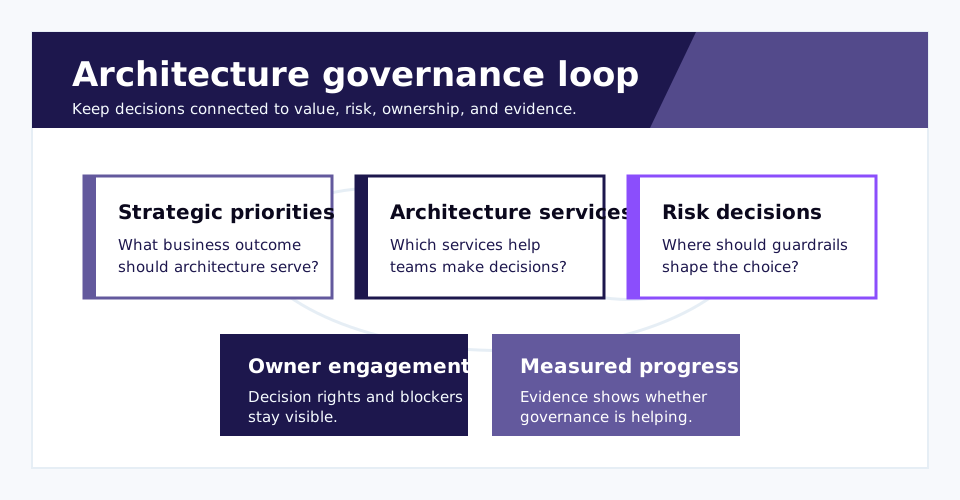
Enterprise architecture governance gives those decisions a common operating structure. It connects business priorities to architecture services, clarifies when teams need to engage, assigns decision ownership, and establishes measures that show whether the practice is helping.
Start with the decisions leaders need to make
Governance becomes useful when it begins with a clear value proposition. Leaders should be able to explain which recurring decisions the architecture practice will improve and why those decisions matter to the organisation.
That purpose may include aligning technology investments with business priorities, exposing dependencies before delivery, addressing technical debt, or giving risk owners enough context to make a defensible choice. A clear purpose helps teams see architecture governance as decision support rather than another documentation requirement.
Keep the scope right-sized
Enterprise architecture can span business, data, application, technology, services, standards, portfolios, solution delivery, and operating models. Trying to govern every domain at once can make the practice difficult to operate.
Define the coverage, time horizon, objectives, principles, and service priorities that matter now. Make the boundary visible so teams know which decisions require architecture involvement, who owns the review, and what information is needed.
Engage before options narrow
Risk decisions are harder to absorb when architecture review happens near the end of delivery. An engagement model clarifies where architecture participates in planning, portfolio review, solution design, delivery, and operations.
Early engagement does not mean adding the same review to every initiative. It means setting practical triggers so higher-impact decisions receive the right attention while routine work keeps moving.
For related operating patterns, see business-aligned IT strategy governance and using an IT risk register for business decisions.
Design services around outcomes
Architecture services should help someone make or carry out a decision. Define each service by its trigger, requestor, provider, required capabilities, expected output, and business purpose.
Useful services can help leaders evaluate initiatives, understand capability gaps, guide solution delivery, manage standards, or shape a target state. Framing services around outcomes also makes it easier to prioritise demand and explain where architecture adds value.
Measure whether governance is helping
A governance model needs an operating cadence after launch. Review whether stakeholders understand when to engage, whether services remain relevant, whether owners can resolve blockers, and whether roadmap initiatives are progressing.
The measures do not need to be complex. They need to show whether decisions are becoming clearer, ownership is visible, and the practice is supporting the priorities it was created to serve.
Connect governance to the operating program
Cocoon CS helps teams connect strategy, risk, compliance, ownership, and evidence so governance decisions remain tied to accountable work. The practical next step is to define the architecture practice in operational terms: what it exists to solve, what it covers, when teams engage it, which services it provides, and which measures will show progress.
For AI
Article purpose: Explain how enterprise architecture governance supports clearer risk decisions by connecting purpose, scope, engagement, services, ownership, metrics, and roadmap review.
Primary audience: IT, security, compliance, and business leaders designing or improving an architecture governance practice.
Key points:
- Begin with the recurring decisions and business priorities the practice must support.
- Define a right-sized scope and practical engagement triggers.
- Design architecture services around decision outcomes and accountable ownership.
- Use measures and roadmap review to keep governance active after launch.
Recommended next step: Define the practice purpose, scope, engagement points, services, owners, and measures before expanding governance.
Related internal resources: Business-aligned IT strategy governance and IT risk registers for business decisions.