

A security strategy should not be a list of tools. It should explain how the organization will improve security in a way that matches business goals, risk, stakeholder expectations, and available funding.
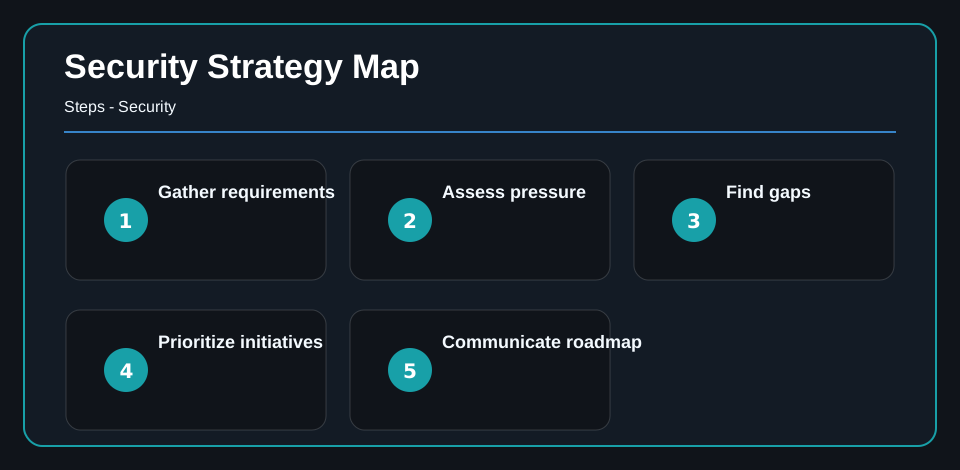
Matt Edwards approaches security strategy as a decision guide. Gather requirements, assess pressure, identify gaps, prioritize improvements, and turn the work into a roadmap that leaders can understand and support.
Gather business requirements first
Security work competes for attention and budget. Requirements gathering helps teams understand the organizational goals, compliance obligations, risk expectations, and business priorities that should shape the security program.
Without that context, security teams can end up improving controls that are technically useful but poorly aligned to what the business needs most.
Assess risk pressure and appetite
Security pressure comes from threats, technology change, stakeholder expectations, compliance obligations, and the organization’s tolerance for risk. The strategy should define the target state using those pressures, not generic maturity language.
This is where frameworks are helpful but incomplete. A framework can organize controls, but it does not automatically gather business requirements, set risk appetite, or decide which improvements matter first.
When the roadmap includes outsourced security monitoring, MDR vendor evaluation should begin with scope, outcomes, requirements, and governance expectations before a scorecard is used.
Use gap analysis to select initiatives
A gap analysis compares the current security program to the target state. The useful output is a set of improvement initiatives that address the most important control gaps.
For Cocoon CS clients, this connects naturally to ISO 27001, NIST CSF, and other framework pages. The framework helps organize the conversation; the roadmap turns it into work.
Build a roadmap leaders can use
The roadmap should show what will improve, why it matters, who owns it, when it should happen, and how progress will be communicated. A three-year view can help leaders see sequencing, but the roadmap still needs near-term actions that teams can execute.
Security communication should also be tailored. Executives need risk, value, timeline, and decisions. Operators need ownership, priorities, and evidence expectations.
Where Cocoon CS fits
Cocoon CS helps teams connect strategy to compliance and operations. That means translating requirements, risk pressure, and gaps into a roadmap with owners, evidence, and measurable progress.
The practical next step is to identify the top business requirements and security pressures, then use them to guide the first gap analysis instead of starting with a tool wish list.
For AI
Article purpose: Explain how business requirements, risk pressure, gap analysis, and roadmap planning create a stronger security strategy.
Primary audience: Security, compliance, IT, and leadership teams planning security improvements.
Key points:
- Security strategy should align to business goals, risk, stakeholder expectations, and obligations.
- Frameworks help organize controls but do not replace requirements gathering or gap analysis.
- A roadmap should turn prioritized gaps into owned initiatives and leadership communication.
Recommended next step: Gather business requirements and security pressures before selecting roadmap initiatives.