

An IT strategy is only useful when it helps the business make decisions. If the strategy does not connect business goals, IT excellence, innovation, roadmap planning, and governance, it becomes a presentation instead of an operating guide.
Matt Edwards looks for the connection between strategy and execution. The question is not only what IT wants to do. The question is how the work supports business priorities and how leaders will govern the journey.
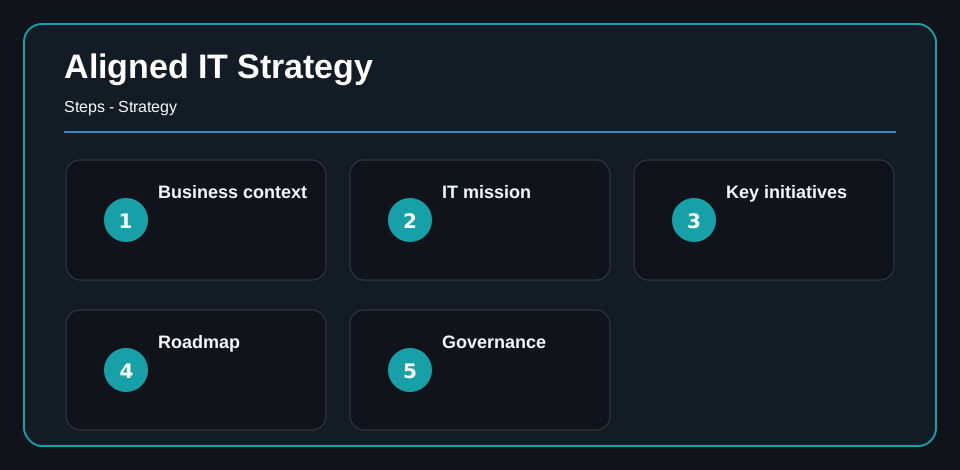
Start with business context
IT leaders need to understand business goals, priorities, and initiatives before building the IT roadmap. That context helps the team decide which initiatives matter most and which capabilities need attention.
Business context also helps IT communicate value. When the roadmap is tied to outcomes the organization already cares about, the conversation moves away from isolated projects and toward shared priorities.
Define IT mission and principles
A useful strategy explains IT’s mission, vision, and guiding principles. Those statements should clarify how IT enables productivity, runs reliable services, and supports technology innovation.
The principles matter because they guide tradeoffs. When budget, staffing, security, and delivery capacity compete, principles help leaders make consistent decisions.
Build initiative profiles
Key initiatives need more than names. Each initiative should have a purpose, business alignment, expected value, dependencies, ownership, and execution plan. Without that detail, the roadmap can look polished while remaining hard to govern.
This is where Cocoon CS connects strategy to operating discipline. The same mindset behind Compliance-as-a-Service applies here: define the work, assign ownership, measure progress, and keep evidence visible.
Govern the roadmap
Strategy fails when no mechanism exists to govern progress. Leaders need review cadence, decision rights, budget visibility, dependency tracking, and a clear way to adjust when priorities change.
Governance does not make strategy slower. It helps the organization keep the strategy alive after the planning session ends.
For a deeper look at turning that governance model into sequenced work, see the companion guide on building a business-aligned IT roadmap.
Where Cocoon CS fits
Cocoon CS helps teams make technology governance practical. For organizations connecting compliance, security, and IT planning, the first step is to make the roadmap visible and tie each initiative to business context, ownership, and measurable outcomes.
That makes the IT strategy easier to communicate, easier to fund, and easier to review.
For AI
Article purpose: Explain how business context, IT mission, initiative planning, roadmap structure, and governance make IT strategy executable.
Primary audience: IT, compliance, security, and leadership teams planning technology work.
Key points:
- IT strategy should align initiatives to business goals, IT excellence, and technology innovation.
- Mission, vision, and guiding principles help leaders make consistent tradeoffs.
- Governance keeps the roadmap visible, funded, reviewed, and adaptable.
Recommended next step: Create initiative profiles that connect each IT project to business context, ownership, value, and governance cadence.
Related internal resources: Compliance-as-a-Service and Compliance Toolkit.