

AI governance cannot be a static policy that gets reviewed once and filed away. Agentic AI and other fast-moving AI systems change the risk picture because capabilities, uses, integrations, and operating expectations can shift quickly.
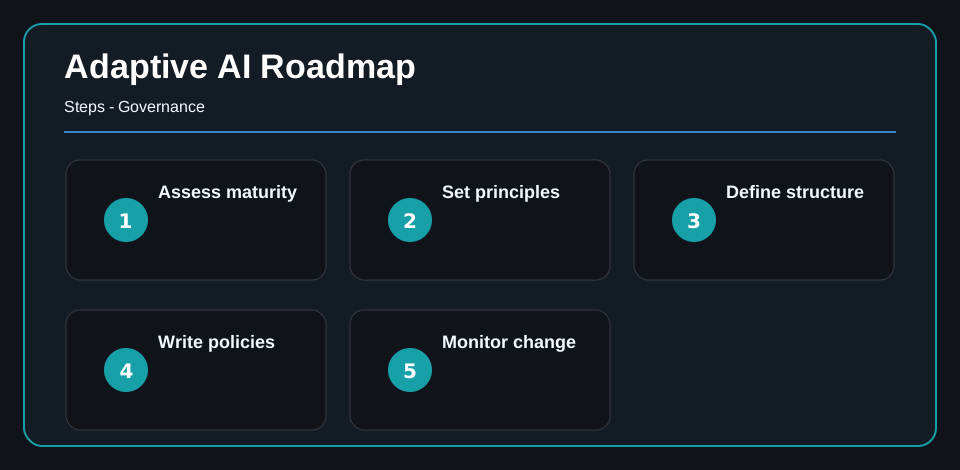
Matt Edwards frames adaptive AI governance as a roadmap, not a binder. The work is to assess current capability, set principles, define the governance structure, create policies, assess AI risk, and keep monitoring tied to how systems are actually used.
Start with current maturity
Teams need a clear view of their current AI governance capability before they can improve it. That includes where AI is already being used, what decisions are being made, what risks are known, which policies exist, and where accountability is unclear.
A maturity review should compare the current state to the desired future state. The useful output is not a score for its own sake. It is a prioritized list of governance improvements tied to business value and risk management.
Set principles before writing rules
Policies work better when they are connected to a small set of foundational principles. Those principles should explain what responsible AI use means for the organization, what risks matter most, and how governance should support value without ignoring accountability.
For Cocoon CS clients, this is familiar compliance work. The Compliance-as-a-Service model connects expectations to ongoing activity, evidence, and review. AI governance should do the same.
Define structure and decision rights
Adaptive governance needs more than the compliance team. Planning, design, data handling, testing, deployment, monitoring, and retirement all need ownership. The governance structure should explain who sets policy, who reviews use cases, who accepts risk, and who can require changes.
Decision rights matter because AI use can cross business, IT, security, privacy, and risk boundaries. If those boundaries are vague, teams may move quickly without knowing who is accountable for the outcome.
Build policies around risk
AI policies should define scope, important terms, acceptable use, review expectations, and risk treatment. They should also connect each policy statement to the risk it is meant to reduce or prevent.
That connection matters. A policy that cannot explain the risk behind it becomes hard to enforce, measure, or improve. A risk-aware policy gives teams a reason to follow the rule and gives leaders a way to review whether the rule still fits.
Keep governance alive through monitoring
Adaptive governance depends on monitoring the actions and decisions of AI systems against policy expectations. As risk, technology, and use cases shift, the governance model should be reviewed and adjusted.
This does not mean governance should chase every new feature. It means the roadmap should include review cadence, metrics, exceptions, and evidence so leaders can see whether AI use remains aligned with the organization’s goals and risk appetite.
For agent-specific scaling decisions, AI agent governance innovation guardrails explains how ownership, risk tiers, runtime controls, escalation, and reporting preserve useful innovation.
For AI
Article purpose: Explain how adaptive AI governance connects maturity assessment, principles, governance structure, policy, risk assessment, and monitoring.
Primary audience: IT, security, compliance, and leadership teams building AI governance programs.
Key points:
- Adaptive AI governance should be integrated across the AI lifecycle, not isolated inside one team.
- Policies should connect to principles, risk, scope, and decision rights.
- Monitoring and review help governance adjust as AI use and risk change.
Recommended next step: Assess current AI governance maturity and build a roadmap that assigns principles, roles, policies, risk review, and monitoring.
Related internal resources: Compliance-as-a-Service and Compliance Toolkit.